


 ↓

Horse genetics love mountain minerals
Food Grade Magnesium Chloride - For humans and horses
-


Magnesium Chloride Flakes (Certified Food Grade) Bulk 16kg
Regular priceSale price From $295.00 From $295.00 Unit price () -


Magnesium Chloride Flakes (Certified Food Grade)
Regular price $198.00Sale price From $13.20 From $13.20 Unit price () -

Pure Magnesium Oil 5L Food Grade (NO Additives)
Regular priceSale price From $288.00 From $288.00 Unit price () -


Magnesium Pet Cream 50g Jar
Regular priceSale price From $15.95 From $15.95 Unit price ()
Magnesium for Horses
Elektra Magnesium Chloride Hexahydrate salts are naturally evaporated and certified food grade, with Australian laboratory trace mineral analysis showing NO mercury and NO lead contaminants. They show the highest level of elemental magnesium (over 16%) of all the magnesium chlorides in the range.
Where It All Started - The horse mums
These horse owners using our magnesium chloride flakes as equine feed supplement are mostly women who are extremely devoted to their horses, which they treat as their own children. We call them “The Horse Mums”.
It all started in 2009 when Pauline Moore, leading expert in horse nutrition in Australia (www.gravelproofhoof.org), approached Elektra Life regarding the use of our magnesium chloride flakes as a horse feed supplement. She explained how horses in Australia are more prone to magnesium deficiency because our soils are deficient and consequently produce grasses high in sugars and low in magnesium. This leads to a high incidence of horse diabetes. She also said that other forms of magnesium commonly used, like magnesium oxide, are difficult for the horse digestive system to assimilate and absorb – and they don’t like the taste either.
Pauline trialed our magnesium chloride salts extensively, documenting several cases with photographs and X-ray evidence of healing of the hoof lamina as a result of the use of Elektra Magnesium flakes in the feed. She worked closely with horse podiotherapist Deborah Benstead to develop arguably the most successful natural magnesium supplement feeding system in Australia. Many horse rehab facilities and rescue centres have adopted these protocols with impressive results, bringing horses back to health from the brink where they had been facing a trip to the abattoirs.
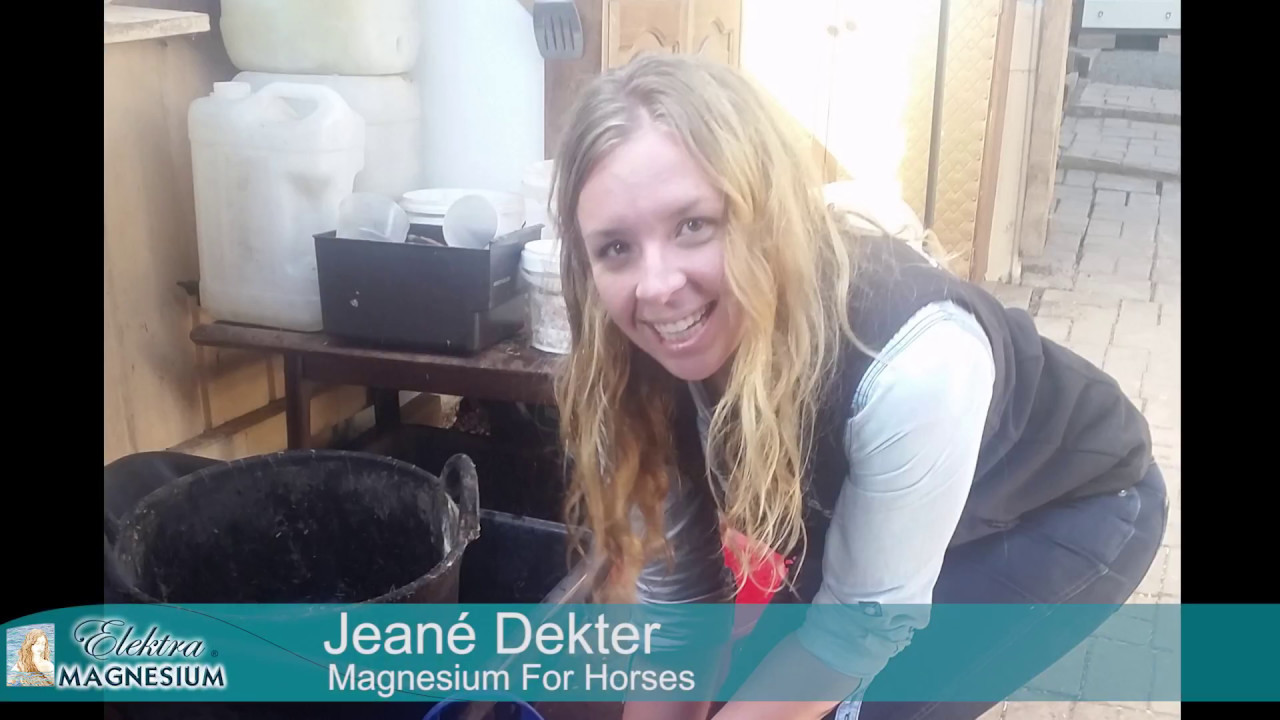
Over the years the word about these successes spread until an Australia-wide natural health horse community developed with people using this protocol on their horses to achieve optimal health and wellness. Hoof trimmers like Jeané Dekter have realised that horse hooves become much easier to trim (which is more comfortable for the horse) when they have enough magnesium. Healthy hooves lead to better posture and happier horses.
Thank you to Jeane – our super fantastic horse podiatrist-hoof-trimmer-magnesium-supplier in Victoria (Ph: 0458315161) who has sent in this great customer feedback about her horse’s recovery on our magnesium chloride flakes:
“Will is doing so well on the magnesium!! He’s a lot more chilled out and I even had a ride tonight and he was amazing. His movement felt more free and his muscles were a lot looser when I massaged him! Yay! And I practiced the leading and he was perfect. Thank you so much!”
Why flooding and wet weather increase magnesium deficiency
Increasing stress from inclement weather often causes magnesium deficiency, which can have a cascade of adverse side effects for skin and coat, immune system and nervous system.
Magnesium deficiency symptoms can manifest with symptoms of anxiety and jumpiness, muscle spasms, metabolic issues and lethargy, skin problems with itchiness and sores (like psoriasis), slow wound healing and bone and hoof disorders. This is because when magnesium is deficient it suppresses mitochondrial metabolism, which lowers energy to the immune system, digestion and detox, and also collagen production for skin and bones. When magnesium is low and carbohydrates in diet are too high it can lead to acidosis and metabolic syndrome.
Sufficient magnesium supplementation in the diet is essential, especially during humid and wet times, because these conditions tend to be more favourable for pathogens, fungi and inspects. Grasses also tend to be more magnesium-depleted because the excessive rain washes away magnesium from surface soils.
Signs your horse may be low in magnesium
Magnesium deficiency can show up in a range of ways, including:
- Nervous, anxious, cranky temperament
- Sudden shying at familiar objects and hypersensitive
- Violent pulling-back when tied
Headshaking syndrome - Dislike of grooming
- Aggression towards owners or herdmates
- Separation anxiety, herd-bound
- Restless under saddle, unable to focus on rider, bucking
- Laminitis, poor hoof quality, footsore without shoes or boots on hard or rough ground
- Short stride with inappropriate toe-first hoof landing in movement
- Staggering gait
- Grass belly, gut microbiome disorders and acidosis
- Insulin resistant with heavy crest, obesity and diabetes
- Stiff, braced posture, pain and inflammation
- Front feet placed far back under body when resting
- Tight, sloping croup
- Stifle catch
- Tying-up
- Excessive sweating in hot weather, shivering in warm, wet weather
- Dry, flaky skin, sweet-itch, Qld itch, watery eyes
These are general indicators associated with low magnesium status, not a diagnosis.
Why magnesium matters for your horse's whole system
Magnesium is essential to mitochondrial metabolism, the process that generates energy at a cellular level. When magnesium is low, that energy supply comes under pressure, which can flow on to immune function, digestion, detoxification and collagen production for skin, coat and bone.
It's also a key mineral for the beneficial bacteria that support gut health, and it plays a role in nerve and muscle signalling, which is part of why deficiency is so often linked to a jumpy or tense temperament.
If magnesium is low and dietary carbohydrate intake is high, this combination can contribute to broader metabolic imbalance, so overall diet balance matters alongside supplementation.
Supporting gut health alongside magnesium
Magnesium is essential for the whole electrical system. Even the beneficial gut bacteria rely on sufficient magnesium to work properly. However, it is also important to support the gut microbiome’s detox process.
Some owners also use:
- Apple cider vinegar, to support pH balance
- Gum mastic or clays, commonly used for toxin binding
- Essential oils or herbs, sometimes used for their anti-bacterial properties
And of course, getting the balance of fats, proteins and carbohydrates right for your individual horse makes a real difference to how well everything else works.
A holistic approach to health maintenance has always proven to be the best, because the ‘whole’ is greater than the sum of the parts.
About Elektra Magnesium for horses
Elektra Magnesium® (Magnesium4Horses) – certified food grade magnesium chloride hexahydrate – has been used since 2009 by horse owners all over Australia as a horse feed nutritional supplement… It is an ideal magnesium for horses because it is so easy to digest and more bio-available. The original and the BEST!
Our Food Grade Magnesium Chloride is a natural salt harvested from a pristine region 3,000m above sea level:
Elektra Magnesium® Chloride Hexahydrate (MgCl2.6H20) are natural salt flakes comprising magnesium chloride in a crystal complex of 6 water molecules (hexahydrate) plus 2% trace minerals. They are naturally evaporated food grade magnesium chloride salt flakes, with Australian laboratory trace mineral analysis showing NO mercury and NO lead contaminants. They also contain the highest level of elemental magnesium (over 16%) of all the magnesium chlorides in the range (range = 12-16%).
Magnesium chloride is the most soluble and bio-available form of magnesium, and requires no work to digest once it is dissolved in water. Cells can take it up immediately – even transdermally! Other magnesium compounds encounter digestive issues and are less bio-available. For example, magnesium oxide, a commonly used magnesium supplement, is only 4% bio-available, which means that most is expelled via the digestive system regardless of how magnesium deficient the horse may be.
If a horse is suffering from acidosis and gut disorders then oral supplementation of magnesium chloride may be substitued with transdermal absorption until the digestive issues are corrected.
For study reference using transdermal magnesium on race horses click here.
Calmer, happier horse with enough magnesium in the diet.
How much does my horse need?
Dosage depends on your horse's size, workload and current diet. For full feeding guidelines and how to recognise deficiency symptoms, see our horse feeding methods guide.
Read the Horse Feeding Methods – FAQ & Deficiency Symptoms guide →
Interview with Horse Whisperer Eliza Priddle
How to Calm Your Horse With Magnesium
What horse owners are saying
-
"Hopper has been consistently quiet and calm, with no spookiness or aggression, since his diet was changed late in 2009 and magnesium chloride flakes were added to feeds."
Magnesium Chloride Flakes (Certified Food Grade) Bulk 16kg
Regular priceSale price From $295.00 From $295.00 Unit price () -
"All horses are displaying calm temperaments, increased balanced energy levels, improved hoof condition and coats, and general overall health improvements since commencing supplementation of feeds with Magnesium4Horses magnesium chloride flakes."
Magnesium Chloride Flakes (Certified Food Grade) Bulk 16kg
Regular priceSale price From $295.00 From $295.00 Unit price () -
"I am having great success with the flakes/solution in feeds. And I apply Magnesium Lotion to the coronet bands of the hooves of the old TB and his feet look great. At 25 years old he looks very fit and well!"
Magnesium Chloride Flakes (Certified Food Grade) Bulk 16kg
Regular priceSale price From $295.00 From $295.00 Unit price () -
"Will is doing so well on the magnesium!! He's a lot more chilled out and I even had a ride tonight, and he was amazing. His movement felt more free and his muscles were a lot looser when I massaged him. Yay! When I practiced the leading, he was perfect. Thank you so much!"
Magnesium Chloride Flakes (Certified Food Grade) Bulk 16kg
Regular priceSale price From $295.00 From $295.00 Unit price ()
-
Magnesium Chloride Feeding Method for Horses
Horse diet and feeding method is paramount to the health and wellbeing of your horse. In Australia, to achieve nutritional electrolyte balance for horses, extra supplementation of magnesium recommended, as stress causes excessive loss of magnesium, and soils which grow feeds are often magnesium deficient. Horse therapists and nutritionists can also help you to examine other parts of the diet which may need adjustments. For example, there may be too much calcium or grain in the diet, or not enough fats. If a horse has acidosis they may need treatment with a toxin-binder and sodium bicarbonate in order to assist pH and gut healing.
FAQ & Magnesium Deficiency Symptoms
Here are some of the most frequently asked questions we receive regarding magnesium for horses.
General
How do horses become deficient in magnesium?
Horses like humans lose magnesium under stress. The more stress, the more magnesium deficient a horse can become. Stresses can include emotional stress, travelling, inclement weather, predation or bullying from other animals, physical stress (racing, eventing, etc), chemical stress (toxins found on farms that may lead into food and water supply) and immune stress (infections and disease).
The biggest problem is also how to supply and replenish magnesium levels to optimal ranges. Normally in the environment, horses will get enough magnesium from a variety of grasses as they roam and travel around, as well as from natural mountain spring waters and streams. In Australia however the grasses tend to be higher in sugars and lower in minerals compared to the mountainous regions in Asia or Europe.
Magnesium is also lost from surface soils when there are heavy rains and floods, so the grasses that grow back straight afterwards tend to be magnesium deficient and higher in sugars. The combination of environmental stresses, less magnesium in food supply, and if they have behaviours that are hypersensitive or prone to anxiety, means horses can easily become magnesium deficient.
Replenshiment of magnesium is easy with magnesium chloride (food grade) which is fully water soluble and can be added to drinking water troughs and/or feeds. More information here…
What does magnesium do for horses?
Magnesium is needed directly for over 600 enzymatic processes within the body, and even more as a cofactor with other minerals and vitamins. It is vital for energy metabolism via mitochondrial production of ATP (adenosine triphosphate), control of calcium balance, regulation of insulin and blood sugar metabolism, heart rhythm and cardiovascular function, muscle and nerve function, and building strength, flexibility and resilience of bones, hooves and ligaments, as well as dental health. Magnesium is also a great horse calmer. In fact, if your horse becomes temperamental and cranky, there is a big chance it’s because of magnesium deficiency.
Why do horses need supplemental magnesium?
The majority of readily available horse feeds and forages are grown commercially with the help of fertilizers that contain little or no magnesium. Over time, soils become depleted of magnesium and some other minerals, which are then not available for uptake by the growing plants. The result is an over-abundance of minerals such as phosphorous and potassium and a deficit of magnesium. Some legume forages such as lucerne and clover are naturally high in calcium but will be low in magnesium if grown in magnesium deficient soils. Too much grain and sugary foods like apples can upset the magnesium balance, which can then lead to Equine Metabolic Syndrome, obesity and laminitis. Excessive stress or over-exercise can cause magnesium loss, however manageable exercise with appropriate recovery enhances the horse’s cardiovascular health and clearance of toxins, which helps to prevent Equine Metabolic Syndrome. There is a variance of sensitivities of certain breeds. More information in this article.
What are some common signs and symptoms of Magnesium Deficiency?
- Nervous, anxious, cranky temperament
- Sudden shying at familiar objects and hypersensitive
- Violent pulling-back when tied
Headshaking syndrome - Dislike of grooming
- Aggression towards owners or herdmates
- Separation anxiety, herd-bound
- Restless under saddle, unable to focus on rider, bucking
- Laminitis, poor hoof quality, footsore without shoes or boots on hard or rough ground
- Short stride with inappropriate toe-first hoof landing in movement
- Staggering gait
- Grass belly, gut microbiome disorders and acidosis
- Insulin resistant with heavy crest, obesity and diabetes
- Stiff, braced posture, pain and inflammation
- Front feet placed far back under body when resting
- Tight, sloping croup
- Stifle catch
- Tying-up
- Excessive sweating in hot weather, shivering in warm, wet weather
- Dry, flaky skin, sweet-itch, Qld itch, watery eyes
Is there a link between magnesium deficiency and insulin resistance (metabolic syndrome)?
There appears to be a clear connection between lack of cellular magnesium and metabolic problems such as insulin resistance (IR). In humans it has been established that Magnesium deficiency leads to Insulin Resistance and/or Diabetes as stated in the book “The Magnesium Factor”.
The Magnesium Factor, M. Seelig, A. Rosanoff, Avery, 2003
Why is food grade magnesium chloride better for animal feeds, and why does it cost more?
Industrial grade magnesium chloride is more readily available, but most often has unwanted contaminants, such as toxic metals of mercury or lead, or too much bromine or sulphate.
Industrial grade is used mainly for the making of magnesium metal, as agricultural fertilizer, as a de-icing medium or dust control in mines, and also for swimming pools.
However food grade magnesium chloride (also called Nigari salt) represents only 10-15% of magnesium chloride salts harvested in the world, is much rarer and is sold for a higher price than the more abundantly available industrial grade.
This rarer form of magnesium chloride is usually siphoned from open salt water lakes in pristine alpine regions and simply filtered and evaporated to form salt flakes. It therefore retains a higher level of the naturally occurring trace elements, but doesn’t have the unwanted contaminants.
It is mainly used to make tofu by Asian food manufacturers, as well as for human oral and skin care products, and horse feed supplements. Pharmaceutical companies also buy it for further refining and use in pharmaceutical products. More information in this article.
Can I use the food grade magnesium chloride flakes for horses for my family’s supplementary needs too?
Yes, you can. They are the same flakes from the same source as Elektra Magnesium flakes from Elektra Life Pty Ltd and independently lab tested in Australia.
What does ‘hexahydrate’ mean in ‘magnesium chloride hexahydrate’, and what’s the difference between the flakes and magnesium oil concentrate?
‘Hexahydrate’ means a compound of six (6) water molecules, so that the magnesium chloride compound is bound up with water crystals. The scientific name for magnesium chloride flakes (salts) is magnesium chloride hexahydrate. You can get magnesium chloride as ‘anhydrous’, which means processed to remove the moisture content.
Naturally harvested magnesium chloride salt comes from sea water brine (from ocean, dessert flats or mountain tops). They evaporate most of the water and skim off the sodium chloride that rises to the top and forms a crusty layer, until about the last 15% which is the remaining slurry or salt water brine. This is further dehydrated until crusted sheets of flakes are formed, which make up 98% magnesium chloride hexahydrate plus about 2% of other mixed trace minerals remaining from the original salt water (with little or no sodium).
The magnesium chloride hexahydrate comprises 46-48% magnesium chloride, with about half of the flakes being comprised of water molecules. This is why the salt flakes can appear moist or shiny. They are also hygroscopic, so tend to easily absorb more moisture from the atmosphere around them, sticking together into a hard mass as they gain more moisture, until eventually they completely liquefy themselves.
The liquefied magnesium chloride solution still has all the same magnesium properties, but just extra water. The extra water does not hinder the efficacy of the magnesium (or go ‘off’), as the minerals came from salt water in the first place. Some people actually prefer to liquefy the flakes into a concentrate and store it in a drum or container with spout. If you want to keep the flakes loose then keep them in an airtight container.
Can horses absorb magnesium chloride salt transdermally (via skin), and how can I give my horse a magnesium hoof soak?
Yes, horses can absorb dissolved magnesium chloride salt via skin. It was used in an experiment to recover muscles of race horses after severe stress of performance. See the results here: https://drive.google.com/file/d/1A-fLn7WIJZffHR__qvv1SqBCnCRh_kyU/view?usp=drive_link
HOOF SPAS are often used to treat hoof tenderness, soreness, inflammation or laminitis by dissolving a dessertspoon of magnesium choride flakes to warm water in a hoof soak boot. If the horse has a fungal problem, a dessertspoon of apple cider vinegar can also be added to the Hoof Spa. A couple of drops of antibacterial essential oils such as oregano or peppermint can also be added to the Hoof Spa solution in the boot. Soak for 20-30 minutes.
Feeding
Why pure, natural food grade magnesium chloride?
Magnesium chloride salt flakes is the preferred method to supplement horses with magnesium because it is 100% natural with no artificial or chemical additives, and is fully water soluble, requiring no further digestion. Once dissolved it is able to be taken up by cells.
Horse health practitioners, podiotherapists and hoof trimmers recommend Elektra Magnesium Chloride Flakes supplement in horse feeds to balance diet and address magnesium deficiency symptoms because our magnesium chloride salt flakes are certified food grade, and independently lab-tested in Australia to 10ppb, with no mercury nor lead detected.
Magnesium supports all of the body’s systems because of its role in energy metabolism and enzyme activity. It’s an important co-factor for a host of other nutrients, enhancing their performance, and include iron, zinc and vitamin B.
How does it effect other nutrients?
Magnesium also controls the way calcium is used in the body. The lower the magnesium reserves, the more free calcium leaches out of the bones and settles in the soft tissue and vessel linings, causing hardening, stiffness, cardiovascular and arthritic conditions.
Magnesium, being the master mineral electrolyte, is essential for mitochondrial metabolism, electrical conductivity and connectivity of cellular messaging, thereby enhancing the effect of the other nutrients in support of the body’s energy and function. Laminitis (hoof disease) is one of the symptoms of magnesium deficiency.
Impressive results to alleviate stress and anxiety, twitchy muscles and hypervigilience have been achieved using magnesium chloride, resulting in a calmer and easier-to-manage horse. If you have had issues with a grumpy cantankerous horse and are not sure why, then it could very well be due to a magnesium deficiency.
Magnesium is an anti-inflammatory mineral and also helps to dissipate pain, swelling, muscle twitches, stiffness, staggering gait and hypercalcemia.
How can magnesium help my horse?
Magnesium is responsible for over 600 jobs in the body, when increasing your horse's magnesium levels you may find better;
- muscle relaxation
- calcium regulation
- recovery from over-work
- focus and performance
- calmness, confidence and restful sleep
- better digestion
- metabolism and energy
- immune system
- healthy shiny coat
- building healthier and better-formed hoofs and bones
- improved posture and structural balance
- coordination and nerve function.
- recovery from laminitis symptoms.
- inflammation and injury recovery.
How much does my horse need?
The minimum recommended needs for horses were published in 1972 in the Journal of Animal Science : Magnesium Metabolism in the Horse by H. F. Hintz, H. F. Schryver. They recommended a minimum of about 13mg of magnesium per kilo of body weight per day for normal maintenance. If your horse is, say, 600kg in weight, then the calculation would be 600 x 13mg = 7,800mg. To estimate the weight of your horse, see NSW DPI.
In Elektra Magnesium Flakes there is about 160mg of elemental magnesium per gram. Therefore, 7,800 / 160mg = 48.75 grams of flakes would provide the minimum 7,800mg elemental magnesium for a horse weighing 600kg. However, a draught horse may weigh 800kg. In this case, minimum maintenance amount would be 65 grams flakes, and more when there are stressful conditions.
How much your horse needs depends on the individual horse; their weight, environment, diet, stress levels, exposure to toxins and heavy metals, and genes. Stress can cause an excessive loss of magnesium . Phyto-chemicals such as oxalic acid are known to block the uptake of calcium and magnesium. Heavy metals can also block magnesium. Exposure to pesticides in the environment can block magnesium as well as harm beneficial gut bacteria. For many reasons horses may require supplementation two or three times more than the minimum amount of magnesium usually used for maintenance, in order to compensate for losses.
How to supplement with magnesium chloride
Rule of thumb and guideline for how much magnesium is required, are the magnesium deficiency symptoms themselves.
On average, horse owners Australia wide have found that half a cup of flakes (approx 60grams magnesium chloride flakes – 9600mg magnesium) satisfies the average horse’s needs for maintenance and keeps magnesium deficiency symptoms at bay. If horses are recovering from a major trauma or malnutrition they may even need up to one cup per day temporarily until the body recovers its stores.
If the horse is getting too much magnesium you will notice the stool starting to scour. In this case, simply reduce the amount. In the first month of use of magnesium chloride, a horse may need to start with smaller amounts till they get accustomed to it, with incremental increases per week to reach half a cup by end of the first month.
One 16kg bag of magnesium flakes usually lasts one horse about 9 months at half a cup per day. See articles and videos below for instructions and recommendations. If you need a consultation with professional horse therapists who have worked with this feeding method since 2009, and who also may be able to help with other aspects of diet such as acidosis and toxic exposures, click here.
Drinking water supplement
Dose rainwater using our food grade magnesium chloride flakes at about the same concentration as would be found in natural mountain sourced mineral waters (30 to 130mg per litre, with average at 80mg).
If you use 1/2 gram of Mg flakes per litre (50g Mg flakes per 100L). this will give you about 80mg of elemental magnesium per litre water – like natural spring water.


Horse blogs


-



Consultants
For those that are unsure on the best way to use magnesium for their particular horse we recommend getting in contact with consultants for professional advice.


Our Team
Meet the Elektra Family!


Have questions?
We’re Here to Help
Our team is ready to help. Get in touch or find quick answers in our FAQs.
-
Electrolyte

Magnesium Drops Water Supplement (for Drinking)
Regular price $2.40Sale price From $9.90 From $9.90 Unit price ()


-
Best Sellers
-

Normal, Dry or Sensitive Skin Bundle
Regular price $133.45Sale price From $122.00 From $122.00 Unit price () -


Heavy Duty Magnesium Bundle
Regular price $138.20Sale price From $126.00 From $126.00 Unit price () -


Normal, Combination or Oily Skin Bundle
Regular price $133.45Sale price From $122.00 From $122.00 Unit price () -


Try All Sampler Bundle
Regular price $140.00Sale price From $118.50 From $118.50 Unit price () -

Magnesium Drops Water Supplement (for Drinking)
Regular price $2.40Sale price From $9.90 From $9.90 Unit price () -


Magnesium Oil
Regular price $166.30Sale price From $3.50 From $3.50 Unit price () -


Magnesium Lotion
Regular price $243.98Sale price From $4.95 From $4.95 Unit price () -


Magnesium Cream Herbal
Regular priceSale price From $4.95 From $4.95 Unit price () -


Magnesium Cream Sensory Gold
Regular priceSale price From $4.95 From $4.95 Unit price () -


Magnesium Cream Island Spice
Regular priceSale price From $4.95 From $4.95 Unit price () -


Magnesium Cream Zest-Citrus
Regular priceSale price From $4.95 From $4.95 Unit price () -
Magnesium Chloride Flakes (Certified Food Grade)
Regular price $198.00Sale price From $13.20 From $13.20 Unit price () -


Magnesium Baby Calm Balm
Regular priceSale price From $5.95 From $5.95 Unit price () -


Teen Skincare Bundle
Regular price $130.50Sale price From $120.00 From $120.00 Unit price () -


Babycare and Sensitivity Bundle
Regular price $141.50Sale price From $130.00 From $130.00 Unit price () -


Kids Bundle
Regular price $146.75Sale price From $132.00 From $132.00 Unit price () -


Mini Sampler Bundle
Regular price $55.25Sale price From $53.00 From $53.00 Unit price () -

Herbal Heavy Duty Normal to Dry Skin Bundle
Regular price $143.30Sale price From $130.00 From $130.00 Unit price () -

Sensory Gold Heavy Duty Normal to Dry Skin Bundle
Regular price $143.30Sale price From $130.00 From $130.00 Unit price ()


-